

Languages
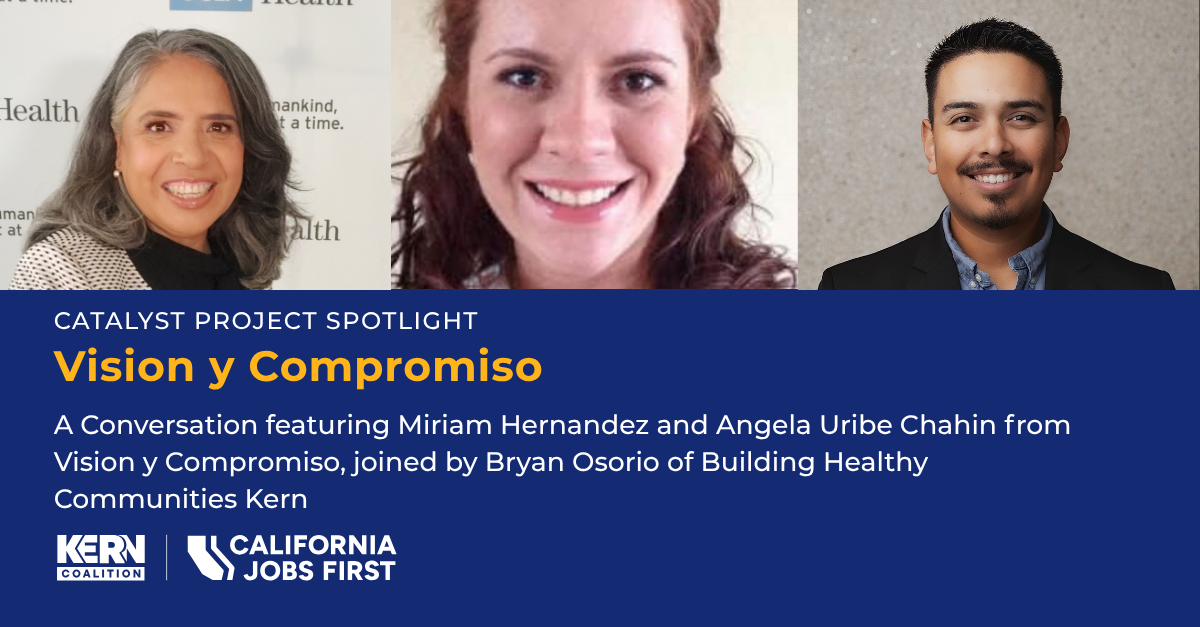
We sat down with Miriam Hernandez, Workforce Development Department Director at Vision y Compromiso, and Angela Uribe Chahin, Project Coordinator for the Workforce Pathways to Employment program, joined by Bryan Osorio of Building Healthy Communities Kern, to discuss how Vision y Compromiso is preparing promotoras to enter the workforce across Kern County, with support from California Jobs First and the Kern Coalition.
Project Snapshot
Can you give us a quick overview of your organization and this Catalyst project?
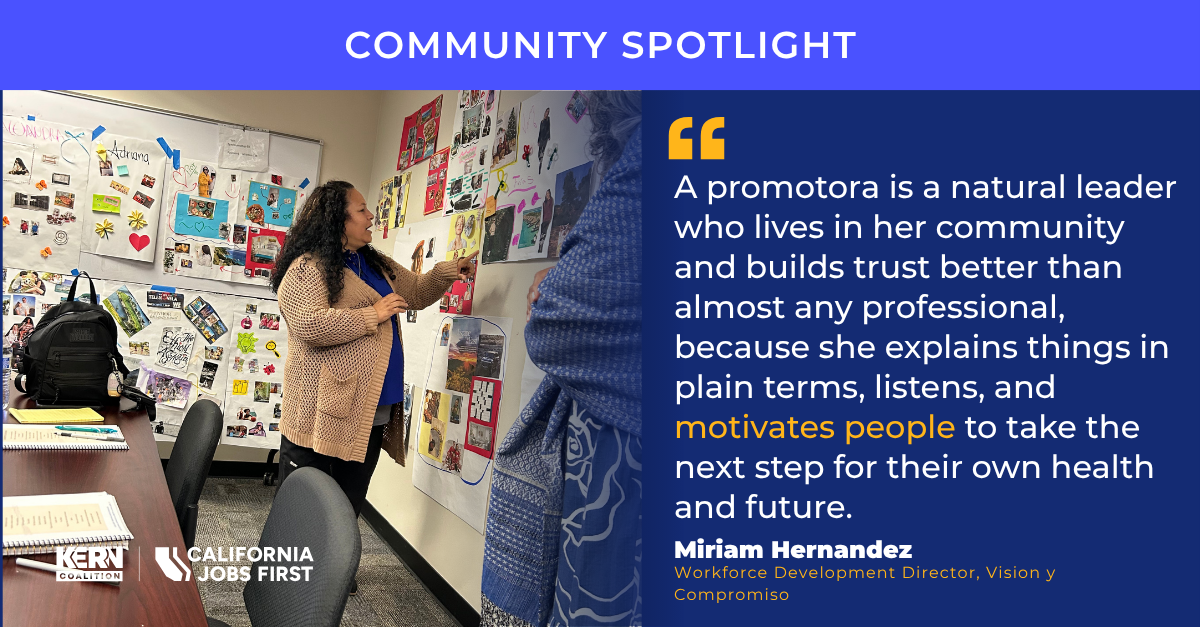
Miriam: Vision y Compromiso works through the promotora model. A promotora is a natural leader who lives in her community and builds trust better than almost any professional, because she explains things in plain terms, listens, and motivates people to take the next step for their own health and future. Our Catalyst project prepares promotoras to integrate into the Kern County workforce, and it also helps organizations recognize the value of the model and open positions for promotoras on their own teams.
Walk us through how the program works.
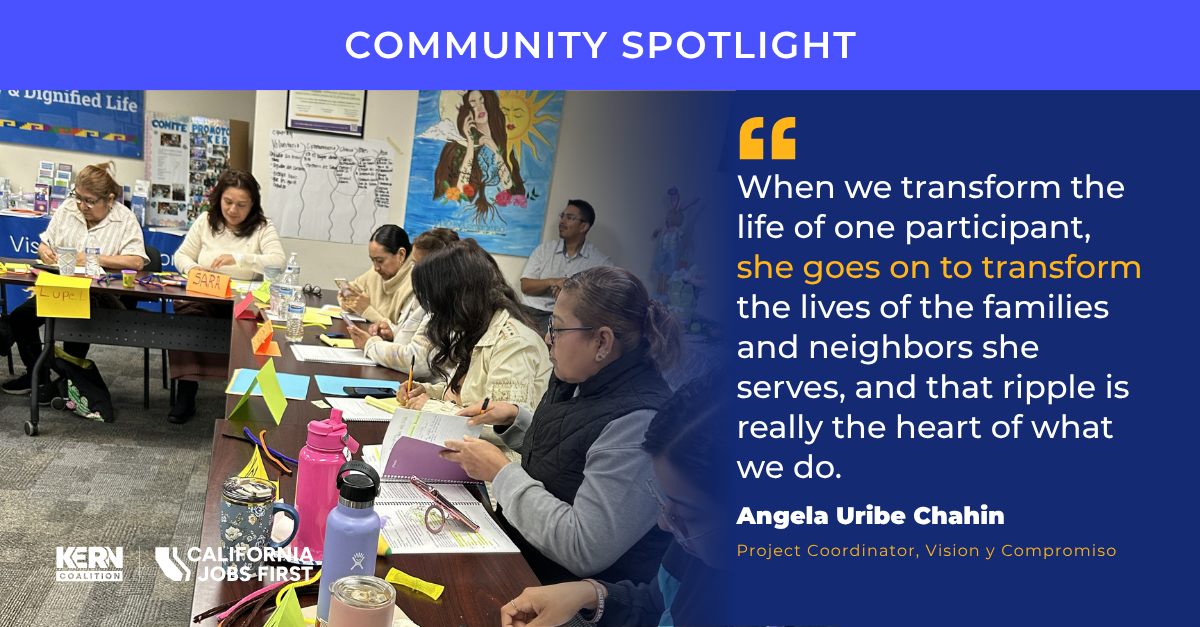
Miriam: It has three parts. First, we interview local organizations and survey promotoras to understand needs on both sides. Second, a cohort of 20 promotoras completes a Workforce Readiness training followed by one-on-one work with a job coach and mentor to build a work goals plan, a resume, and interview skills, plus certifications like the Diabetes Prevention Program or asthma educator that open specific career paths. We also run a mobile labor center, a hands-on practice space where promotoras polish and send resumes and rehearse interviews. Third, through the FFN curriculum, informal childcare providers learn they can pursue childcare work or form cooperatives.
How has support from the Kern Coalition and California Jobs First shaped this work?
Bryan: BHC has been a strong supporter for this work. Earlier this year, I attended a weekend of promotora trainings and watched predominantly women leaders start off timid and grow into empowered advocates, which was genuinely moving to see. Seeing how Miriam and Angela helped participants define an attainable, high-quality job, and believe in it, was captivating, and we try to support where we can while drawing out the leadership already within the promotoras.
Miriam: The coalition's support has also opened doors beyond our own network. Through California Jobs First we've been able to connect with other awardees and organizations across Kern County, and it's helping us think about how to sustain and grow this work well past the grant period.
What results are you most proud of?
Angela: One young promotora from McFarland joined after finishing her high school diploma, took the trainings, and landed her first job as a promotora. She wasn't who we most expected to place first, and now she believes in herself and can support her family. We're also training participants to form cooperative businesses, which creates sustainable income and transforms family realities in Kern County.
How do you see this work rippling out to benefit Kern County?
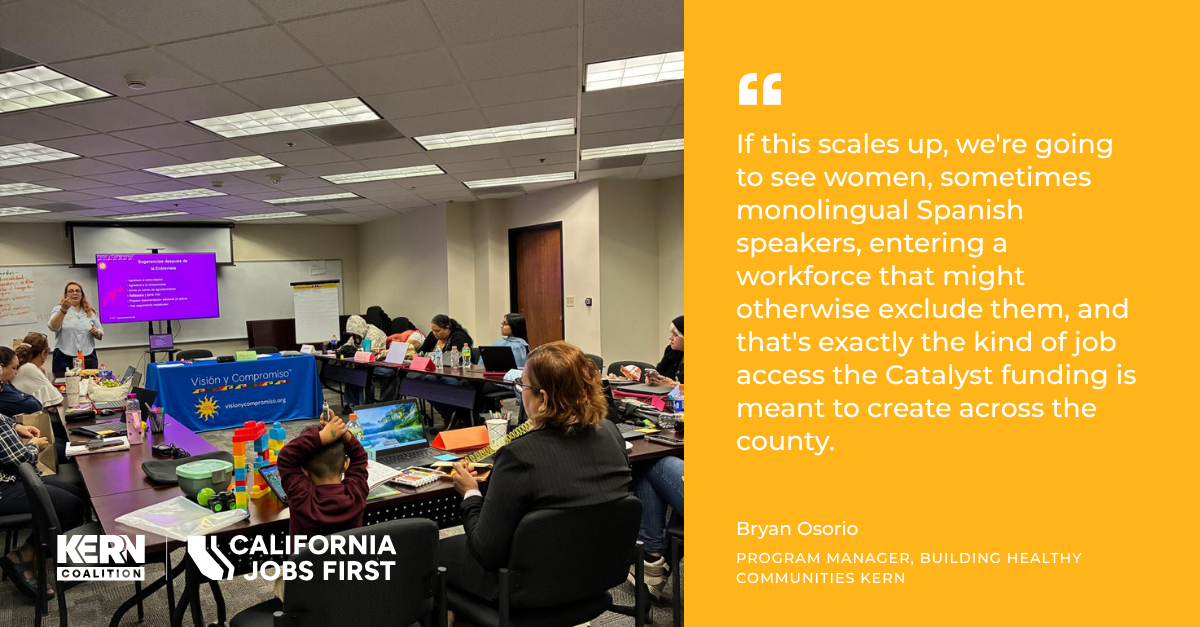
Bryan: Knowing about the certification programs offered through these trainings, and seeing how they've translated into interviews and job opportunities, is impressive. If this scales up, we're going to see women, sometimes monolingual Spanish speakers, entering a workforce that might otherwise exclude them, and that's exactly the kind of job access the Catalyst funding is meant to create across the county.
Angela: Every one of these promotoras carries what she learns back into her community. When we transform the life of one participant, she goes on to transform the lives of the families and neighbors she serves, and that ripple is really the heart of what we do.
Where do you see this program in the next one to three years?
Miriam: We want a continuous program, not a project that ends with the grant, so we're pursuing other funding through our development department. The organizations we interviewed have suggested building a coalition here in Bakersfield to apply for grants together and elevate the role of the promotora, and we'd like to expand into advocacy at the local, state, and national levels so more funders recognize and invest in the model.


