

Languages
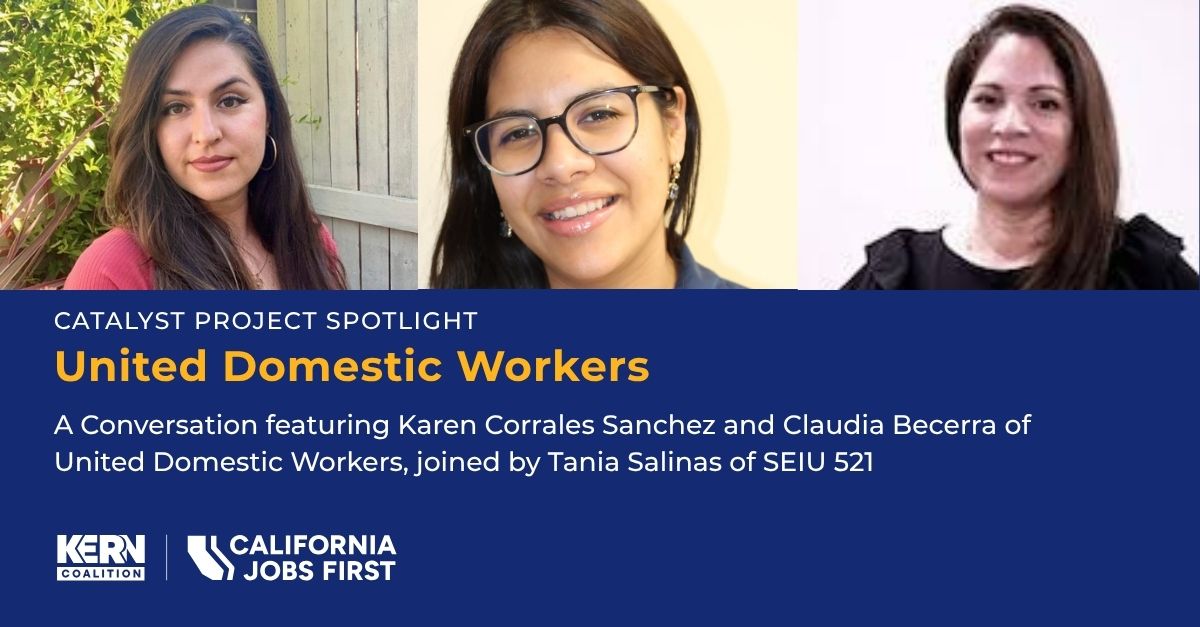
We sat down with Karen Corrales Sanchez and Claudia Becerra of United Domestic Workers (UDW), joined by Tania Salinas of SEIU 521 and the Kern and Mono Central Labor Council, to discuss how UDW is expanding climate-resiliency career pathways for caregivers and low-wage workers in Kern County, with support from California Jobs First and the Kern Coalition. Karen and Claudia shared how a holistic, member-led approach is helping care providers envision a just transition into clean energy and climate-responsive industries, and their vision for building pathways that outlast the grant.
Karen and Claudia, can you give us a quick overview of UDW for folks who may not know your work?
Karen: We're the labor union representing in-home supportive services home care workers, the people who provide care for elderly and disabled Californians who need help with daily living, along with licensed family child care providers and “family, friends, and neighbor providers who run a child care in their own homes. We're a statewide union in California. Our membership is 78% women and made up overwhelmingly of Black, Indigenous, people of color, and immigrant communities. We do all of this work with love, the same way our members care for the most vulnerable people in our communities.
How does this Catalyst project fit into your broader mission, and what makes your approach different?
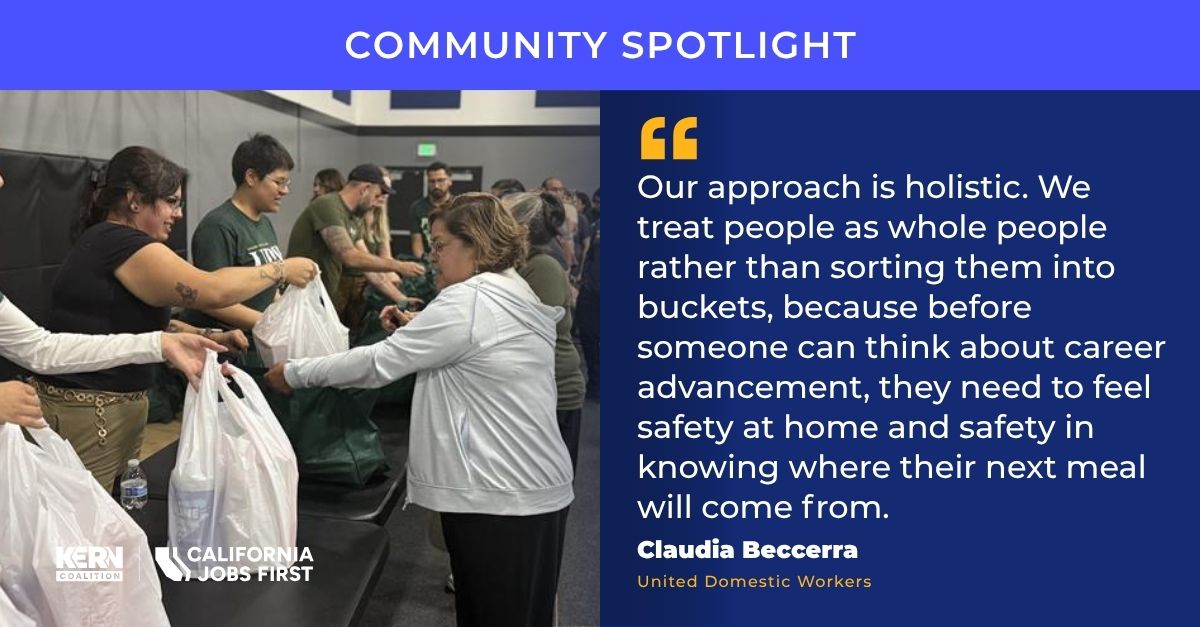
Claudia: The biggest thing is understanding what our community actually needs and helping members and their families thrive. We engage members through focus groups and surveys so they can define what a quality job means to them, because that looks different depending on someone's physical capacity, language, or access to continuing education. Kern County is vast, and support often gets centralized in Bakersfield, so we prioritize reaching rural areas. Our approach is holistic. We treat people as whole people rather than sorting them into buckets, because before someone can think about career advancement, they need to feel safety at home and safety in knowing where their next meal will come from.
Through the Catalyst project, these existing relationships provide entry points for connecting members to climate-resiliency career pathways. Alongside our community resiliency and climate justice work, we manage a Community Colleges program and a Gateway to Citizenship program. On the climate side, we engage members around the environmental burdens in their area, how to understand them, how to tackle them, and how to talk about them with other members. We also have a seat at a Kern County roundtable on green infrastructure investment, where member leaders are at the forefront of helping envision what a Just Transition looks like here. Building member leaders that are able to have a seat at the table for decisions in their communities, and them training other members in their area builds sustainability after the grant period for members to pursue climate-resiliency career pathways.
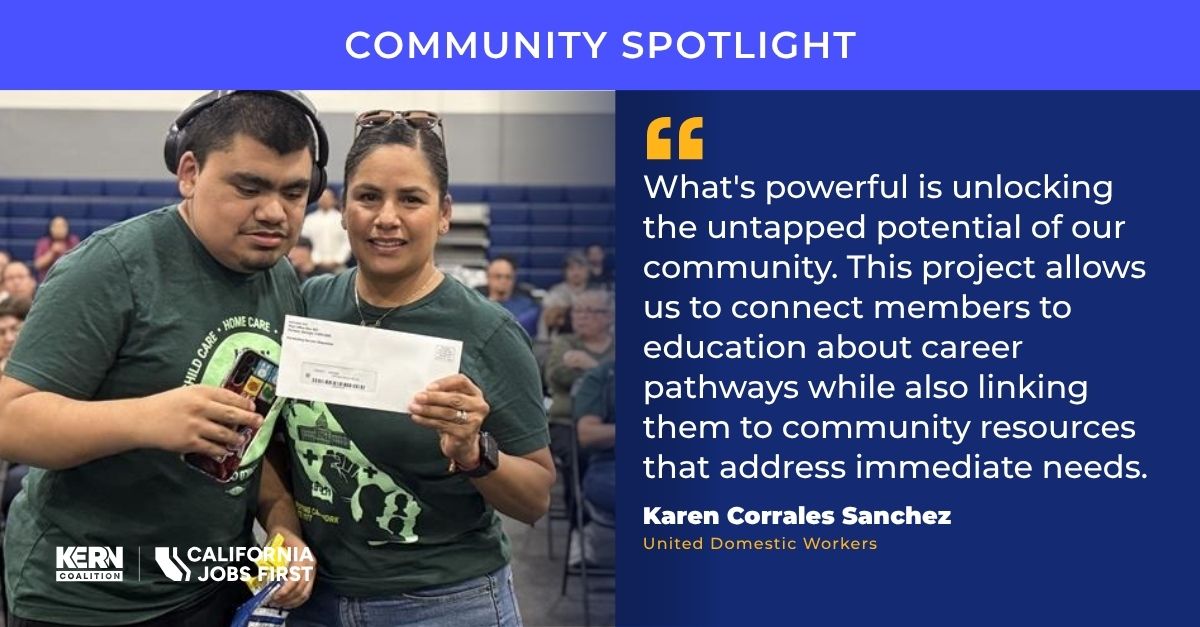
Karen: What's powerful is unlocking the untapped potential of our community. Our members are the experts in their own lives and in the challenges around them. But we're also clear-eyed: if someone can't pay rent or eat, workforce development isn't the first step. At an area meeting in Arvin, we engaged with members who were overwhelmed, unsure if they could pay rent or where their next meal would be coming from. This project allows us to connect members to education about career pathways while also linking them to community resources that address immediate needs.
How have the Kern Coalition and your California Jobs First partners shaped this work?
Tania: Within the Catalyst grant, our goal is to uplift UDW and connect them to the resources and stakeholders that give the project sustainability beyond the funding. UDW is helping members explore and access pathways into clean energy and climate-resiliency careers. A lot of that support is about creating partnerships. The building trades are one pathway: members can earn certifications and join MC3 pre-apprenticeship programs to move into clean energy and solar work. Another is certification through the Kern Community College District's New Century program. As a union, UDW can even stand up a dedicated cohort just for its members. And whether a member stays with UDW or moves into a new trade, they stay within the union.
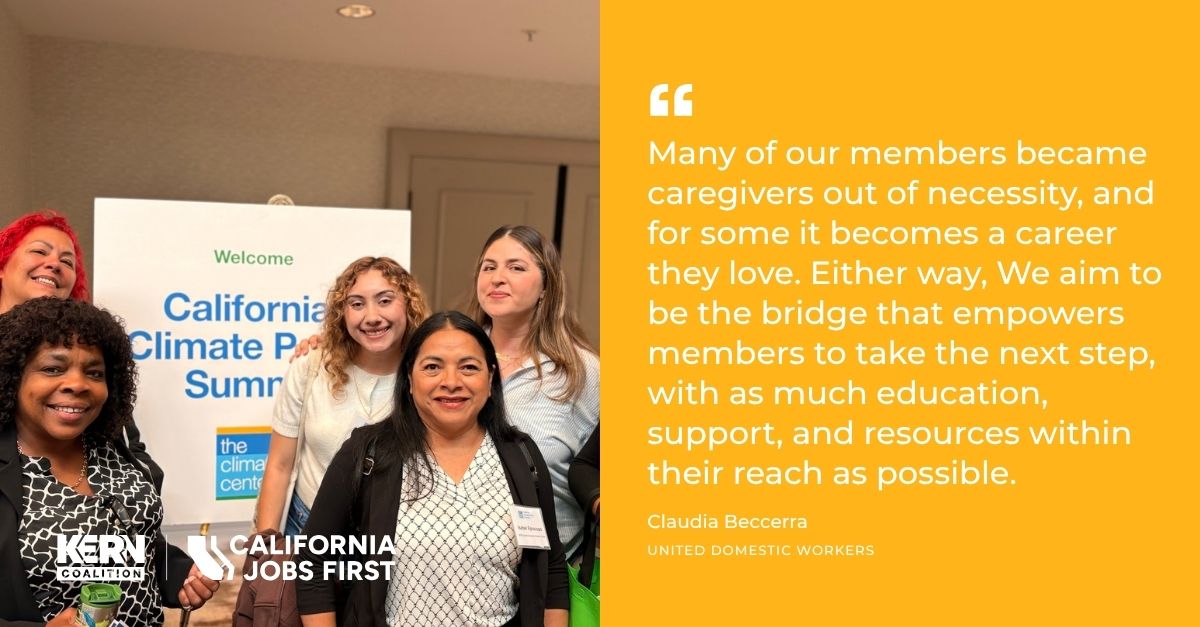
Claudia: Those introductions are invaluable. Having the building trades join our upcoming event is a strong example. A warm introduction makes all the difference, especially because connecting with community college programs on our own has been challenging. Our members do not work traditional jobs where they clock in and out. Many became caregivers out of necessity, and for some, it became a career they love. Either way, we want to serve as a bridge, giving members the education, support, and resources they need to take the next step.
Karen: We've also partnered with the Chancellor's Office for the California Community Colleges on a demonstration project to help members and their families move through career pathways. Members have identified barriers such as childcare, prerequisite coursework, and waitlists that can make it difficult to pursue new career opportunities. Some apprenticeships in Kern have six-month waitlists and are geared toward high school students, not caregivers who may be 45 or older. Requirements such as college algebra, along with the need for childcare, can discourage members from pursuing a different career path. Meeting members where they are is how we make this sustainable.
What results or stories about impact are worth elevating?
Claudia: Building pathways for members to become leaders has been the biggest focus. We brought member leaders to the California Climate Summit, where one of them, Monica, advocated care providers and told their stories in rooms where those voices are rarely heard. Getting members civically engaged and giving them a seat at the table, including in green infrastructure funding conversations, has been remarkable. We also lead a trust-based approach at community events. We don't ask people to prove their need, we just provide, whether that's care items or food. At the Arvin area information meeting, everyone had a chance to share how they came to caregiving. Some spoke of isolation, others of real joy, and several left wanting to learn CPR and emergency response so they could provide care better.
Karen: A quieter but powerful impact is the one-on-one work. There's a lot of shame for members who weren't able to finish high school, or who came from another country and don't know whether their credentials count. Sitting down with someone, applying to college together, and seeing the relief on their face when they realize they can go to school, that has been deeply rewarding. And for many of our caregivers, they are taking care of a family member; we aim to empower them to envision how to continue caring for their recipient while also taking steps to improve their own lives.
What's the call to action for someone reading this?
Karen: Our ask is for employers to look honestly at what steps they're taking to support workers transitioning into clean energy, away from industries that are extracting, polluting, and often unsafe. We want employers to create spaces for real dialogue with the community. Our members and communities carry a lot of expertise, and there needs to be a bridge that connects them to these pathways. If an employer has a union, listen to those workers and understand the challenges they're facing. And we'd welcome the community to see these pathways firsthand at our August 13 Community Fair.Tania: If you're interested in supporting climate-resilient workforce pathways, partnering with UDW, or learning more about upcoming training and community events, we encourage you to connect with us.


