Languages
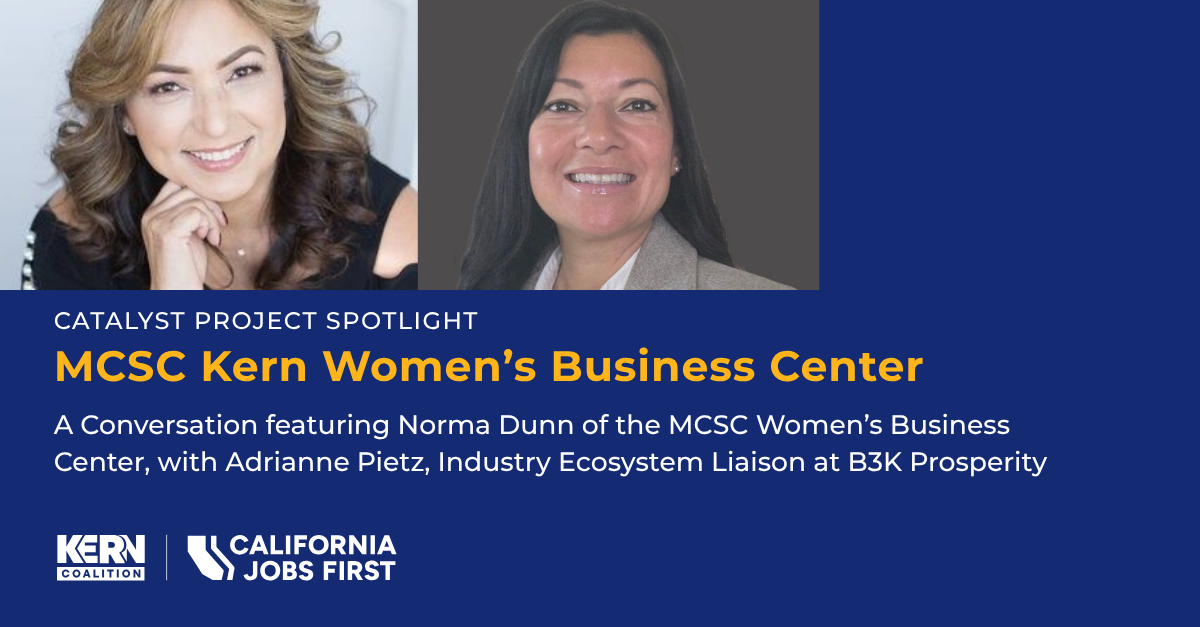
We sat down with Norma Dunn of the MCSC Kern Women's Business Center, and Adrianne Pietz, Industry Ecosystem Liaison at B3K Prosperity, to discuss how the center is bringing small business resources and access to capital directly into Kern County's rural communities, with support from California Jobs First and the Kern Coalition. Norma and Adrianne shared how a first-of-its-kind rural tour is building trust in communities that have long felt overlooked, and their vision for turning a Kern County demonstration into a model that other regions can follow.
Project Snapshot
Norma, can you give us a quick overview of the MCSC Kern Women's Business Center and the work you do in the community?
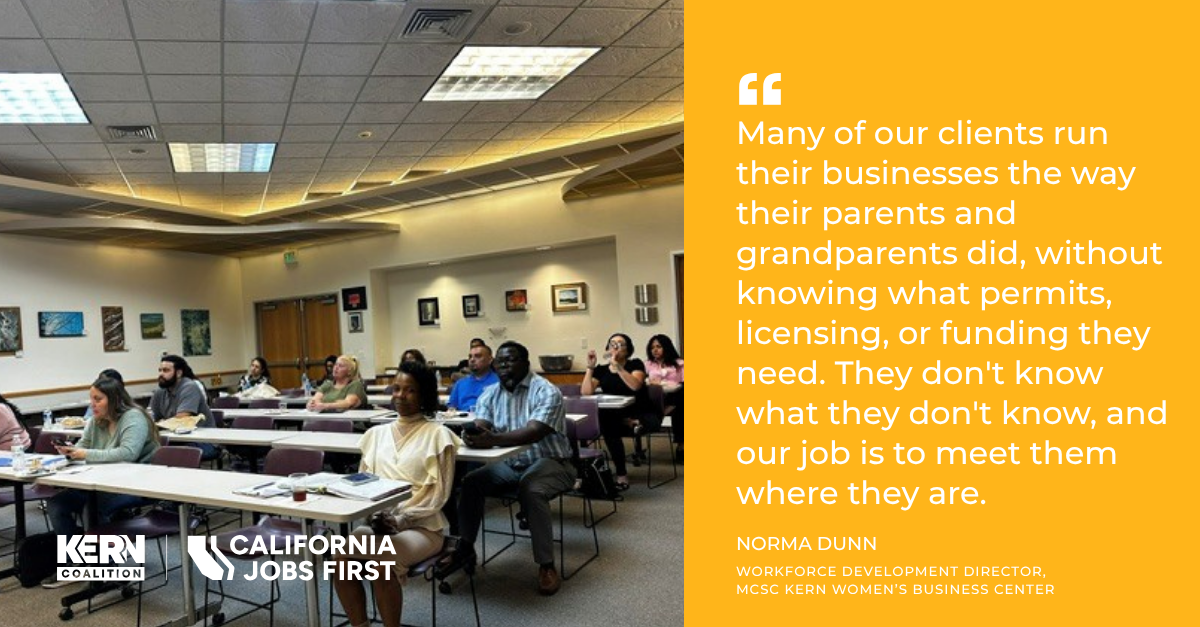
Norma: We provide small business resources and technical assistance to owners across Kern County: workshops, business courses, and one-on-one consulting, all offered in either English or Spanish. Despite our name, we help everyone, not just women. The gap we set out to close is in our rural communities. Many of our clients run their businesses the way their parents and grandparents did, without knowing what permits, licensing, or funding they need. They don't know what they don't know, and our job is to meet them where they are.
Walk us through how the tour works, and what makes your approach different.
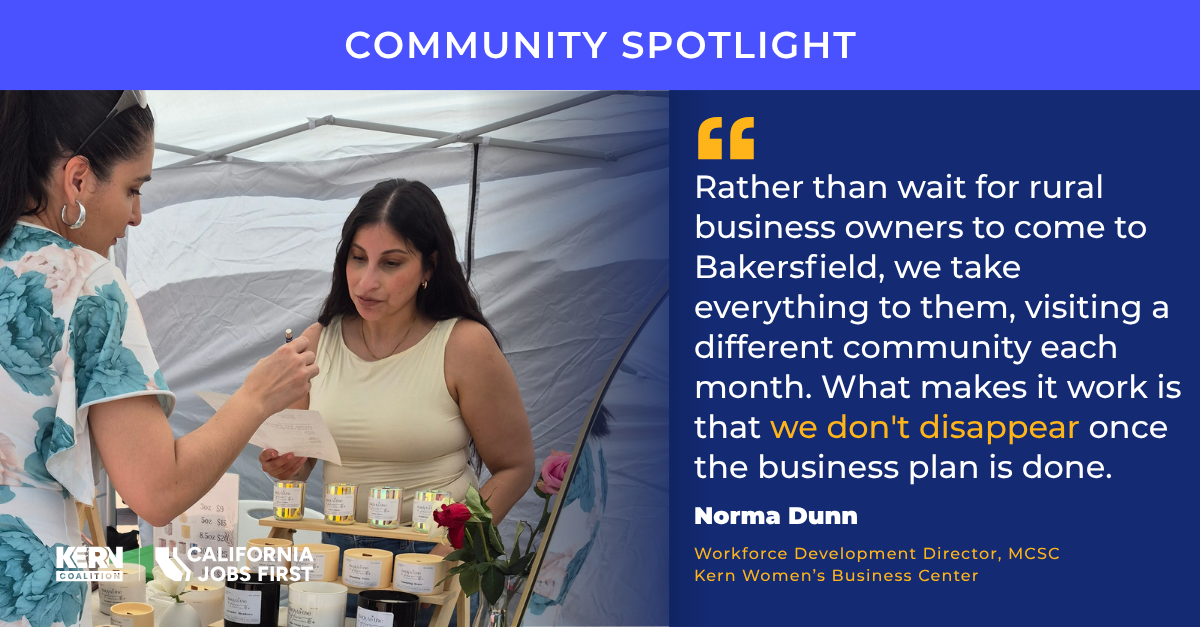
Norma: I thought of it as a concert tour. Rather than wait for rural business owners to come to Bakersfield, we take everything to them, visiting a different community each month. We bring our full team – along with our resource partners, including the SBA, Cal OSBA, CDFIs, banks, and procurement experts – and set it up as a panel conversation so owners can talk directly with the people who can fund and support them. Since many of these towns don't have a chamber of commerce, we partner with the city instead. They help spread the word. What makes it work is that we don't disappear once the business plan is done. We're here for the long haul, whether a client comes back in six months or three years.
How has support from the Kern Coalition and California Jobs First shaped this work?
Norma: The funding is what makes the tour possible. Driving to a place like Ridgecrest is four hours round trip before the event even starts, and no organization can do that for free. California Jobs First and the Kern Coalition make it sustainable. Just as important is the visibility. We've always been boots on the ground, but the coalition helps our work reach people outside Kern and connects us with other awardees. Through those introductions we've started collaborating with Líderes Campesinas’ and Vision y Compromiso [two other Catalyst awardees].
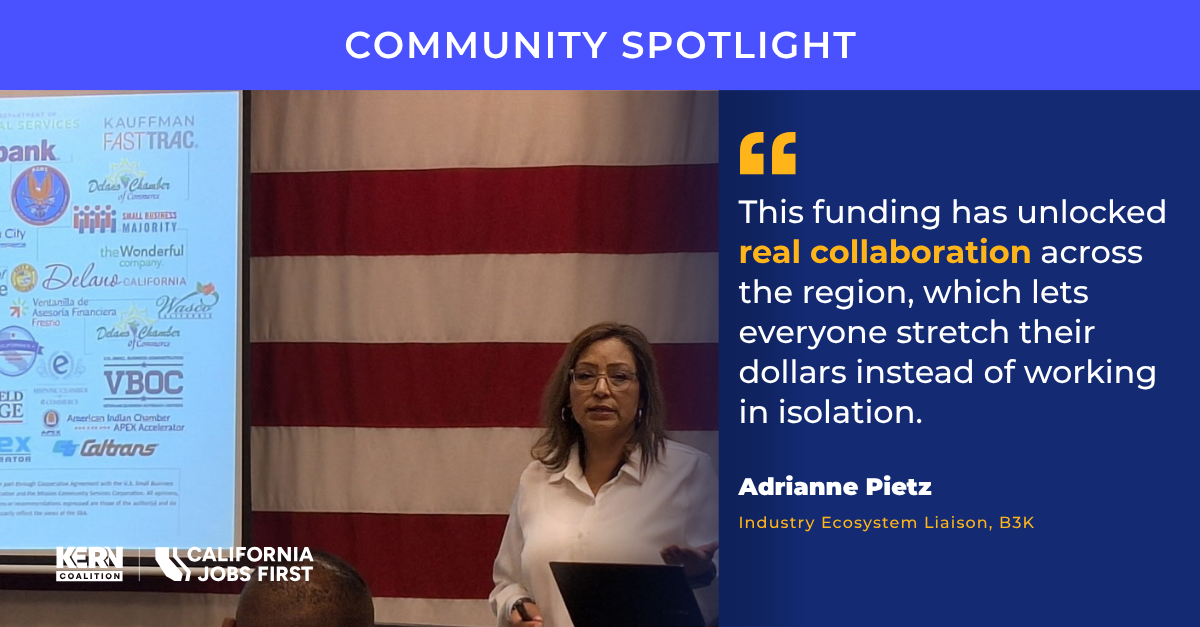
Adrianne: This funding has unlocked real collaboration across the region, which lets everyone stretch their dollars instead of working in isolation. Norma's tour is also a proof of concept. She's demonstrating a dire need in our rural communities, and the data from her reporting – from businesses getting certified to winning contracts to expanding – helps us make the case for the funding that keeps this going.
What results or stories capture the impact so far?
Norma: In June alone, our loan specialist packaged $46,000 in funding for clients, in amounts from $5,000 up to $20,000, exactly what each business needed to get going. We also ran a three-part series with the Department of General Services to help businesses get certified for state contracts. Thirteen enrolled, and about eight are already certified or in process. But the story I love most is a client who came into our Spanish business plan class planning to open a restaurant. Talking it through, she realized she had more than 30 years of experience as a tailor. She opened her own alterations and tailoring shop in Bakersfield, and she's bringing her family into the business with her. That kind of impact is why we do this, and it's gotten enough attention that Cal OSBA now wants to replicate our tour model across the Central Valley.
Where do you see this going, and what would make it sustainable beyond the grant?
Norma: We're launching client ribbon cuttings, our own ceremonies when a business opens its doors, so owners feel they're part of the community and know we're here for the duration. The goal is to keep this sustainable after California Jobs First ends. We've already been approached to join several grant applications, including one with the USDA.
Adrianne: We need to make sure Norma and her team get the exposure to keep this funded well beyond the grant. Our grant writing team is always looking for the next opportunity to sustain work that's moving our communities forward.
What's the best way for someone to get involved or learn more?
Norma: Follow us on Facebook, Instagram, and LinkedIn, visit our website, or just call the office. We have an English line and a Spanish line, and we're happy to help. And remember, you don't have to be a woman to work with us. We help everyone.