

Languages
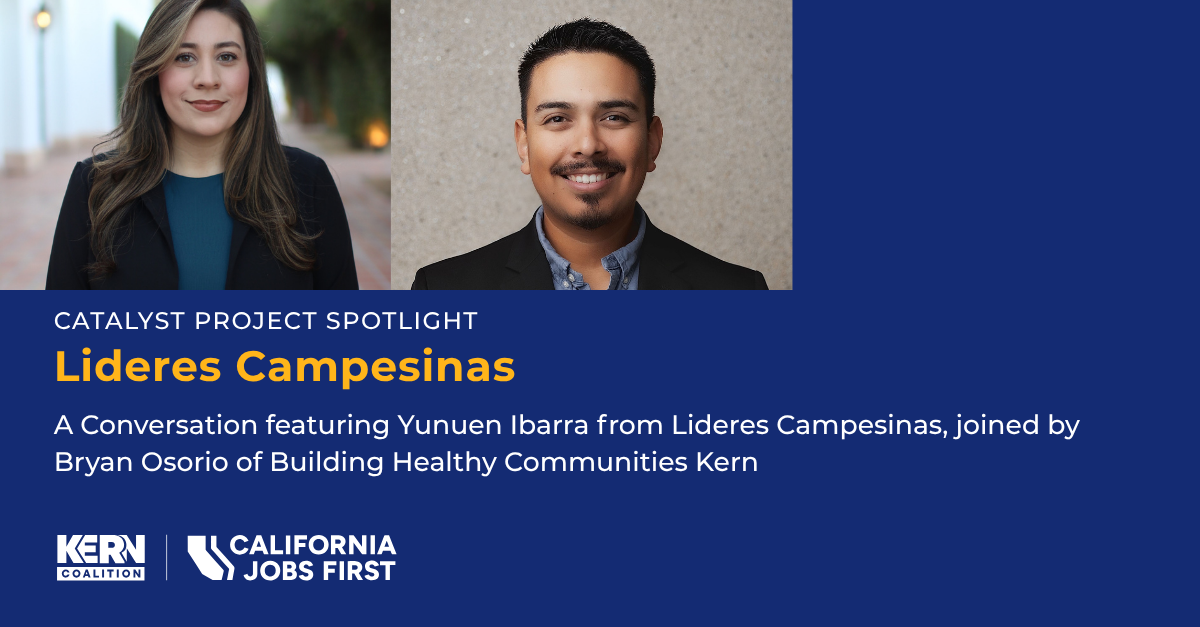
We sat down with Yunuen Ibarra, Director of Programs at Líderes Campesinas, joined by Bryan Osorio of Building Healthy Communities Kern, to discuss how Líderes Campesinas is helping farmworker women in Kern County become small farmers and cooperative business owners through its CAMPO project, with support from California Jobs First and the Kern Coalition.
Can you give us a quick overview of Líderes Campesinas and how this Catalyst project fits your mission?
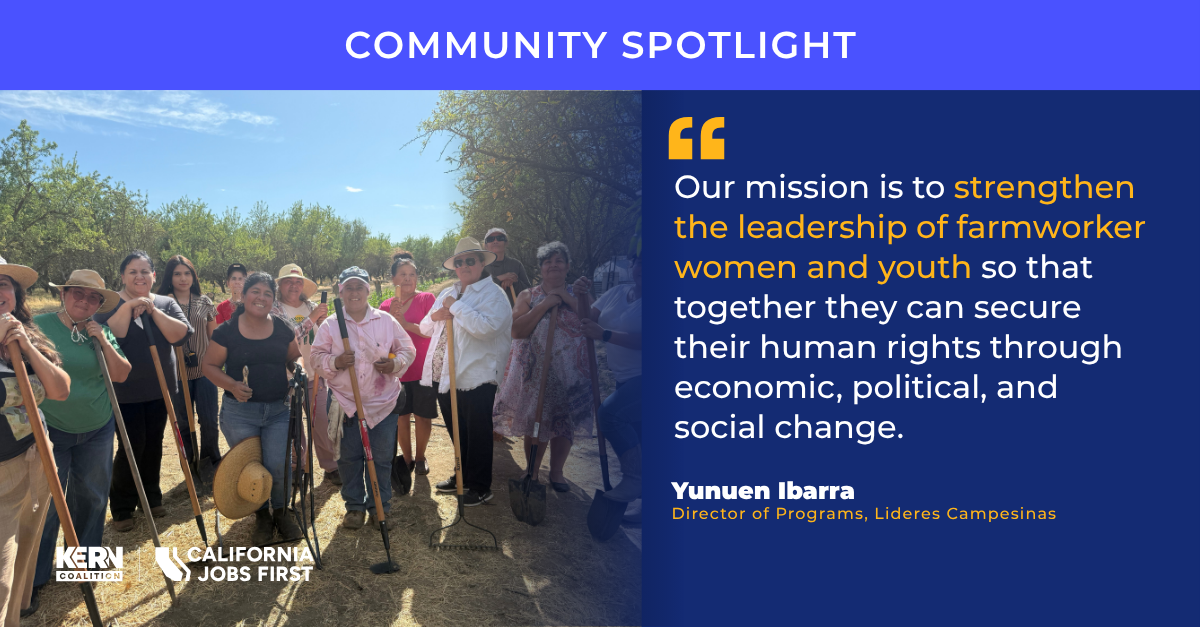
Yunuen: Our mission is to strengthen the leadership of farmworker women and youth so that together they can secure their human rights through economic, political, and social change. We're a statewide, membership-based organization present in 19 chapters. Farmworkers face unsafe conditions every day and are often underserved and cut off from resources other communities take for granted. Our CAMPO project changes that narrative. Through a cooperative, farmworker women grow their own fruits and vegetables using alternatives to the pesticides they and their families are so often exposed to, and they gain real economic independence: what they grow, what they charge, who they sell to, and how they give back to their community. This will help them sustain their future cooperative.
Walk us through how CAMPO works.
Yunuen: It builds on years of our statewide Mother Earth workshops, where women share knowledge on composting, managing pests, and making their own alternatives to pesticides, and on a cooperative model we developed in Ventura County. We started by forming an advisory committee of farmworker women, because governance had to come first. That committee decides what to plant, how to price, what to learn, and how to resolve conflicts, so the women lead the work.
Next we searched for viable farmland, which is not easy to find, and partnered with the Rodale Institute, whose team lent us land in Wasco where we now plant and harvest. Every month the women attend workshops on topics they chose themselves, from sustainable agriculture to using machinery, and they apply what they learn on the land right away. We're also collaborating with a local women's business center on the business side, so the cooperative can eventually run independently.
How have the Kern Coalition and your partners shaped this work?
Bryan: BHC partners with Líderes on a number of local efforts, and for CAMPO our role has mostly been to listen and support. Going on the site visit before any seeds were planted, seeing the land and meeting the farmworker women, was genuinely inspiring. Líderes is already on top of everything, from recruiting their 20 women, and then some, to running the workshops and taking community leaders to conferences on the cooperative model, so we're here to help get the word out wherever we can.
Yunuen: The community support has been the biggest surprise. This was a brand new project for us in Kern, and we didn't know who would show up. When I went to buy supplies, the regional manager at Home Depot asked why I needed 20 shovels and rakes, and after I explained CAMPO he offered to donate soil and seeds and loop in other locations. KCCD and the women's business center have been just as supportive, and that backing means everything for a first-time project.
What results are you most proud of?
Yunuen: Twenty farmworker women are leading this cooperative, and their families and neighbors are involved too. We also held computer classes, and many of the women had never turned on a computer before, and some don't fully read or write. Now they're tracking their inventory in spreadsheets. This week they finished their first harvest, about 22 pounds of zucchini, and decided together to sell it to friends and family, setting their own price and earning about $50.
That first sale is a huge milestone. It shows how effective these workshops and conversations are, and it proves that this kind of humane, sustainable land management can be led by farmworkers themselves. And it doesn't take 20 acres. Some of these women grow herbs and tomatoes on an apartment balcony and know exactly how to put it all into practice.
How do you see this work benefiting Kern County?
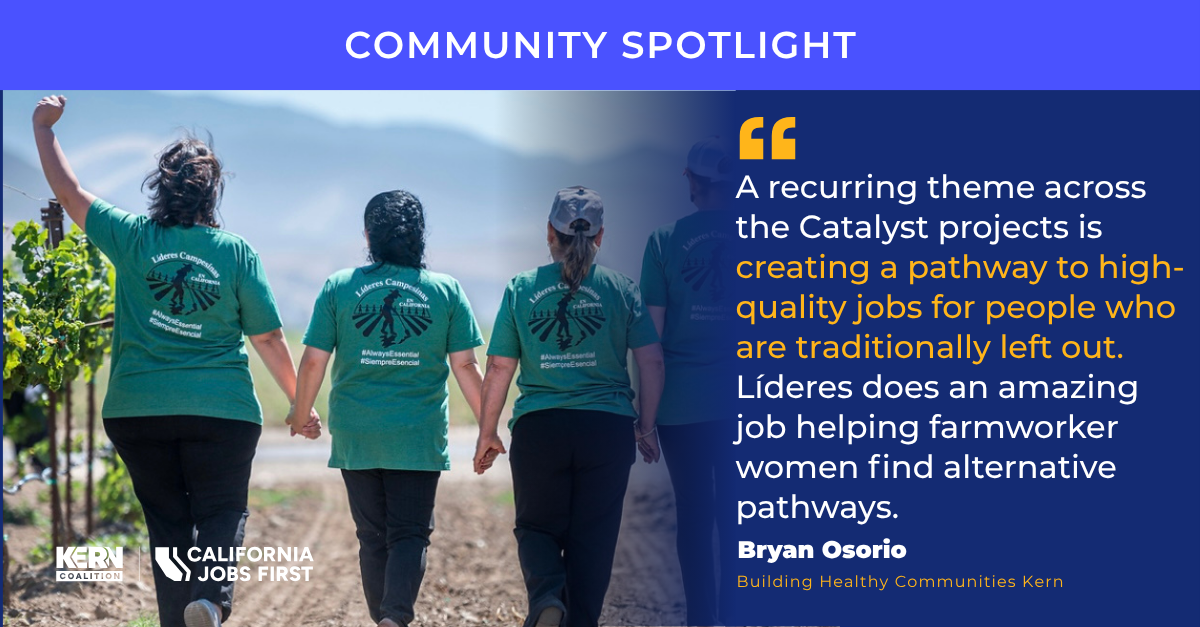
Bryan: A recurring theme across these projects is creating a pathway to high-quality jobs for people who are traditionally left out. Líderes does an amazing job helping farmworker women find alternative pathways, not necessarily outside agriculture, but by blending their experience with entrepreneurship, which creates real independence for families. They're a statewide organization, so if this model succeeds here, it can be replicated across the Central Valley and beyond, and that matters especially as agriculture goes through major economic transitions.
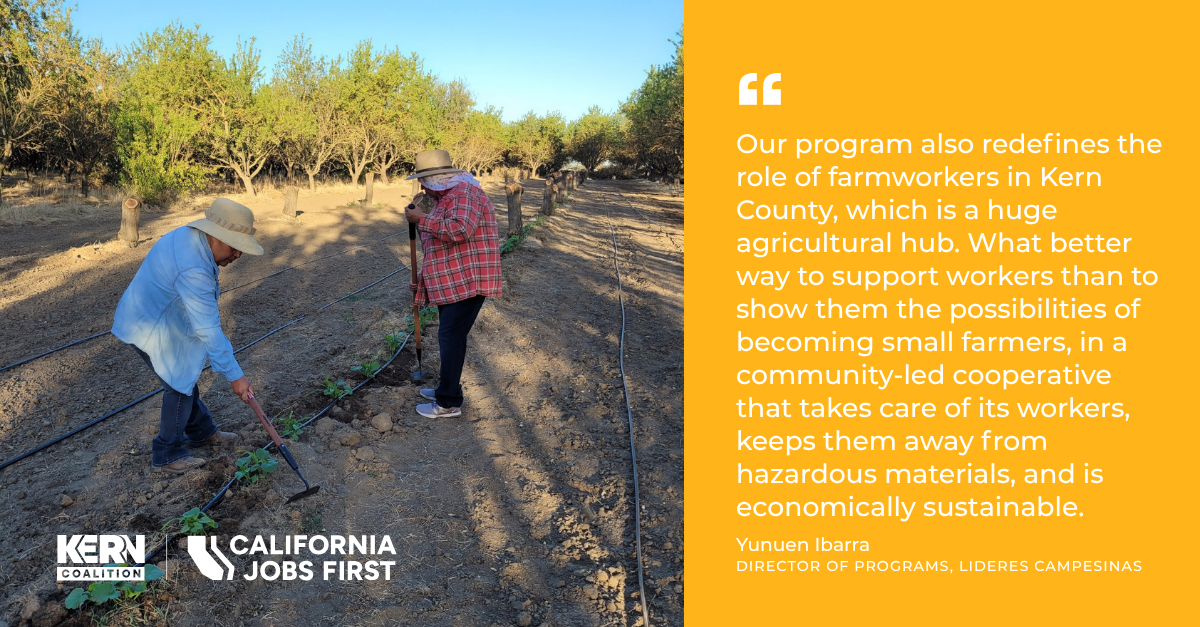
Yunuen: It also redefines the role of farmworkers in Kern County, which is a huge agricultural hub. What better way to support workers than to show them the possibilities of becoming small farmers, in a community-led cooperative that takes care of its workers, keeps them away from hazardous materials, and is economically sustainable. It sets an example that the bigger companies can, and should, do better.
What's the best way for someone reading this to get involved?
Yunuen: Become part of Líderes Campesinas as a member or volunteer. Come to our information tables, learn about our programs, partner with us, and join our awareness months. And as political environments shift, unrestricted funding and even simple donations like seeds go a long way toward helping the farmworker women in these cooperatives grow.


